Sports Vision Training
Sports Vision Training focuses on improving how efficiently the eyes and brain work together during sport. These visual skills play a critical role in reaction speed, accuracy, decision-making, and consistency — and importantly, they can be trained.
All training is individualised, sport-specific, and based on the results of a Sports Vision Assessment. Training is only recommended when testing indicates that visual performance may be limiting sporting ability.
What Is Sports Vision Training?
Sports Vision Training is a structured programme of guided visual skill training designed to improve performance-related visual abilities — not just eyesight clarity.
Unlike generic vision exercises or online programmes, Sports Vision Training:
Is based on objective assessment findings
Targets sport-specific visual demands
Is measurable, progressive, and goal-directed
Is supervised and adapted as performance improves
Training is designed to translate visual improvements into real-world sporting performance.
Which Visual Skills Can Be Trained?
Depending on the athlete’s assessment results, training may focus on improving:

Reaction time
Responding more quickly and consistently to visual information.
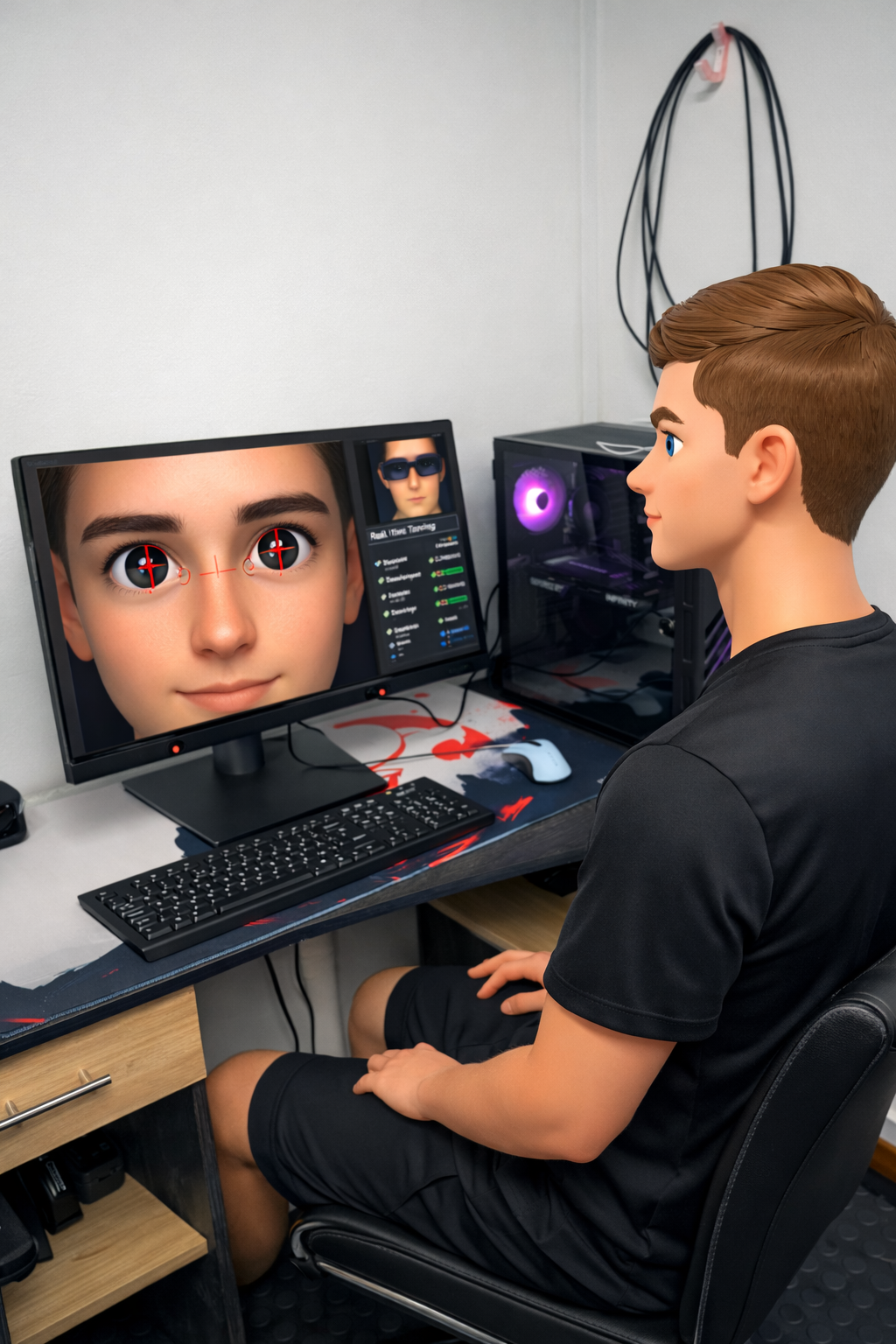
Eye tracking & focusing speed
Accurately following moving objects and shifting focus efficiently.
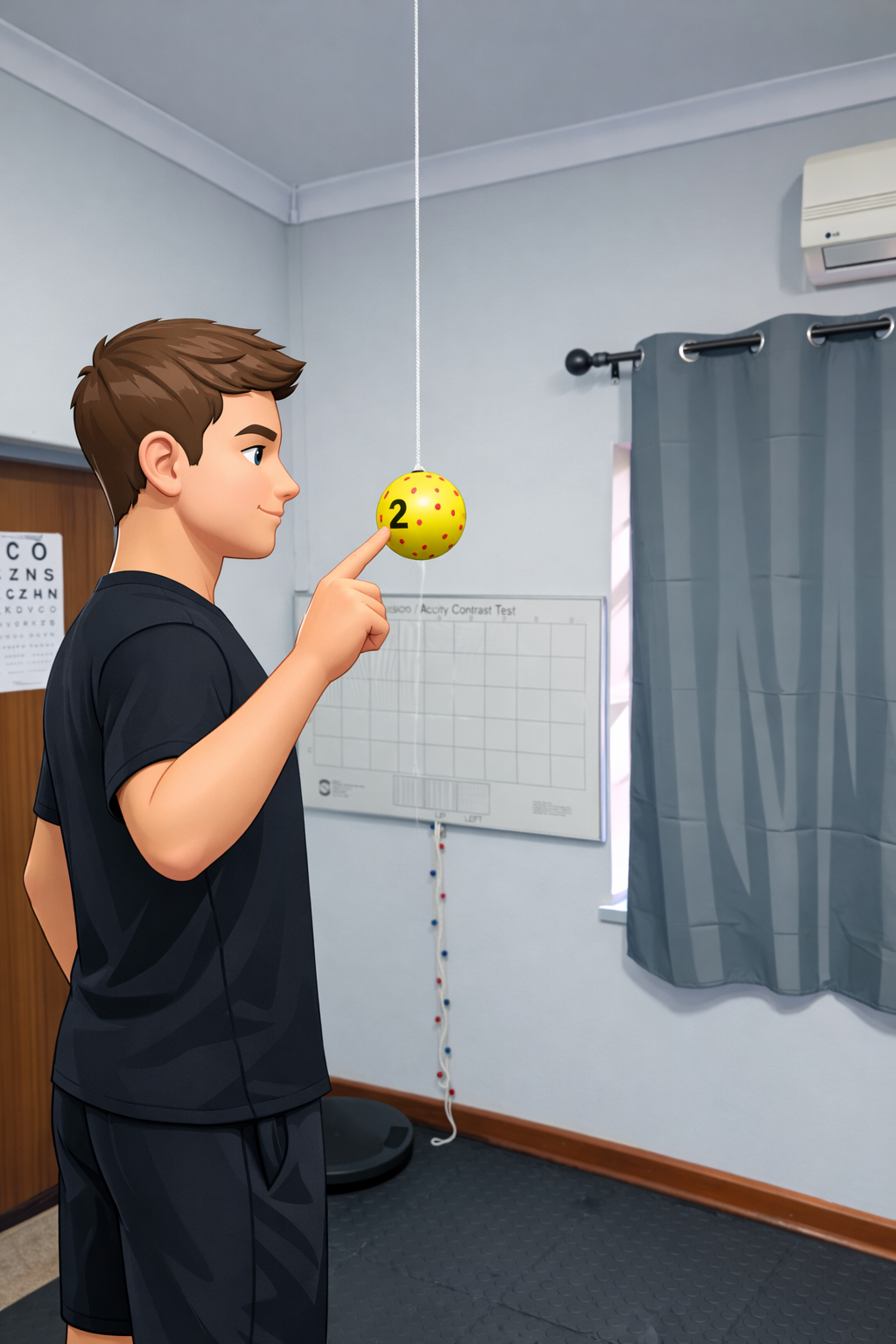
Depth perception & timing
Judging distance, speed, and spatial relationships more precisely.
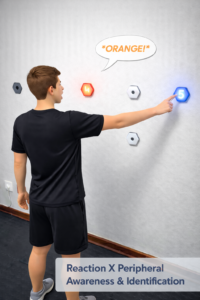
Peripheral awareness
Maintaining awareness of activity outside central vision.
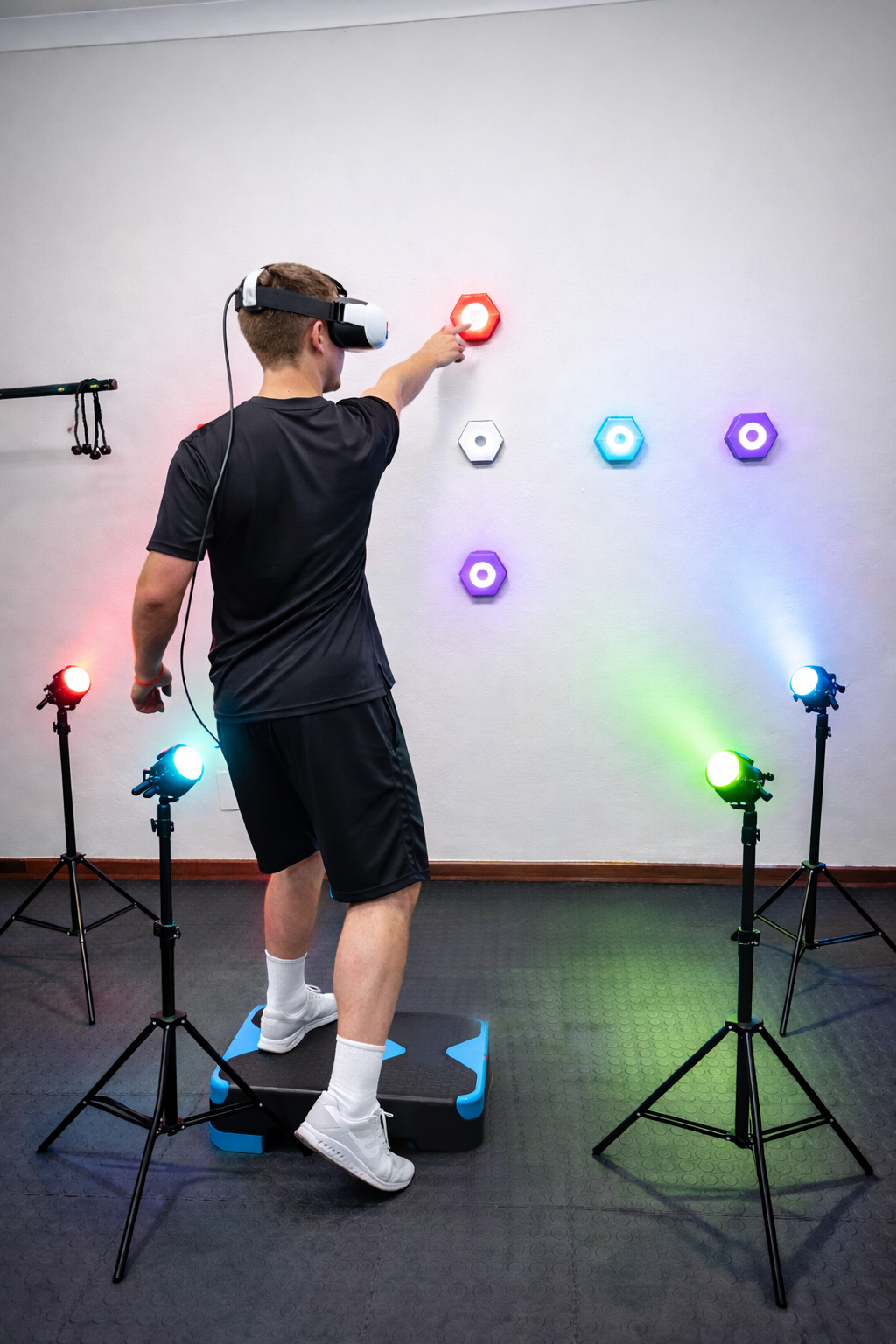
Eye–hand & eye–body coordination
Converting visual input into controlled, accurate movement.
Visual endurance
Maintaining visual performance under sustained effort and fatigue.
Specialised training equipment
We use specialised equipment to train and enhance functional visual performance.
Specialised sports vision equipment:
Advanced training tools designed to improve visual reaction time, coordination, awareness, and processing speed in sport-specific conditions.

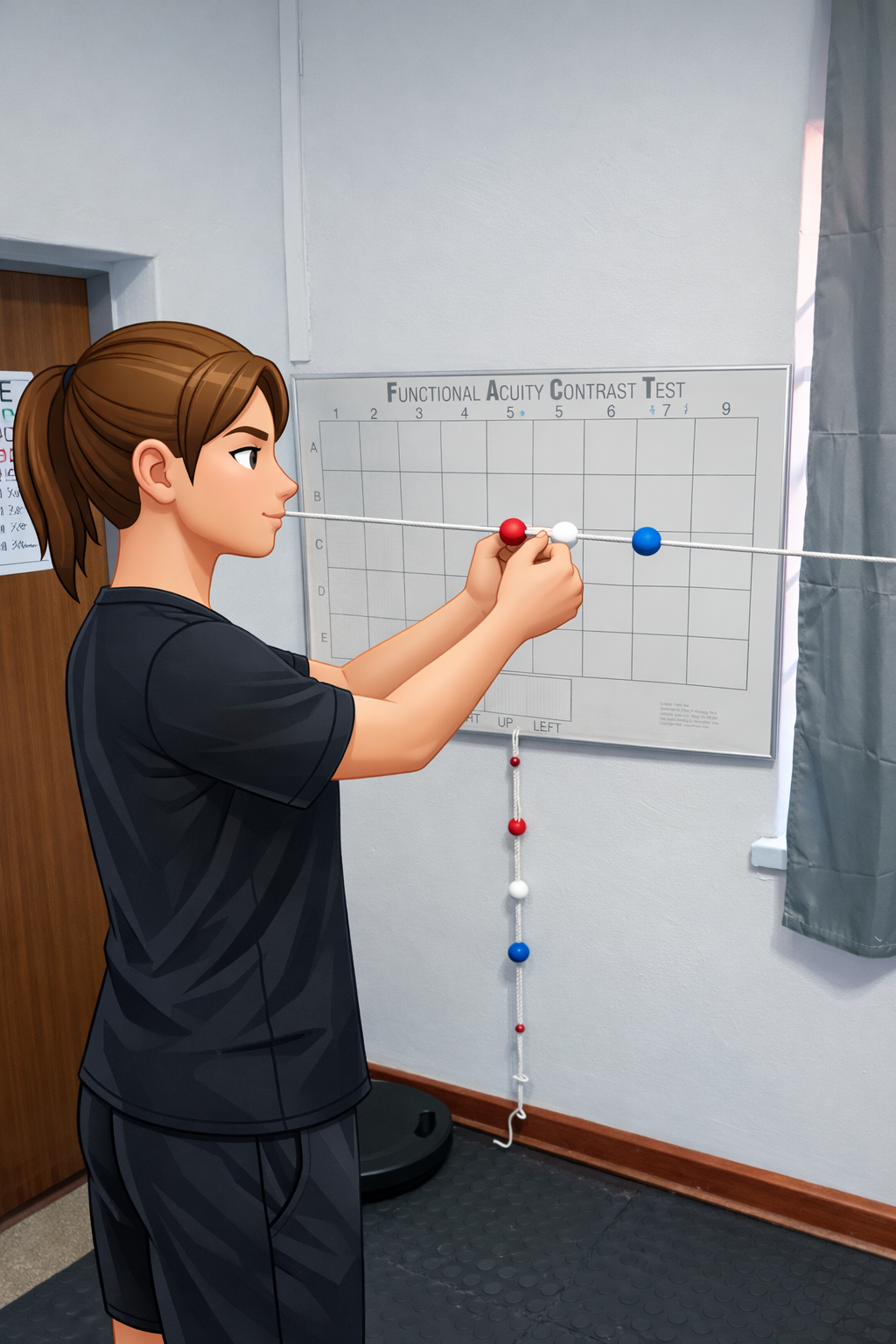
Binocular optometry training devices
Such as Hart charts, Brock string, Marsden ball, Rock cards. Train eye teaming, focusing accuracy, depth perception, and coordination between the two eyes during dynamic visual tasks.

Eye tracker
Objectively measures eye movement accuracy, stability, and tracking precision down to the degree.
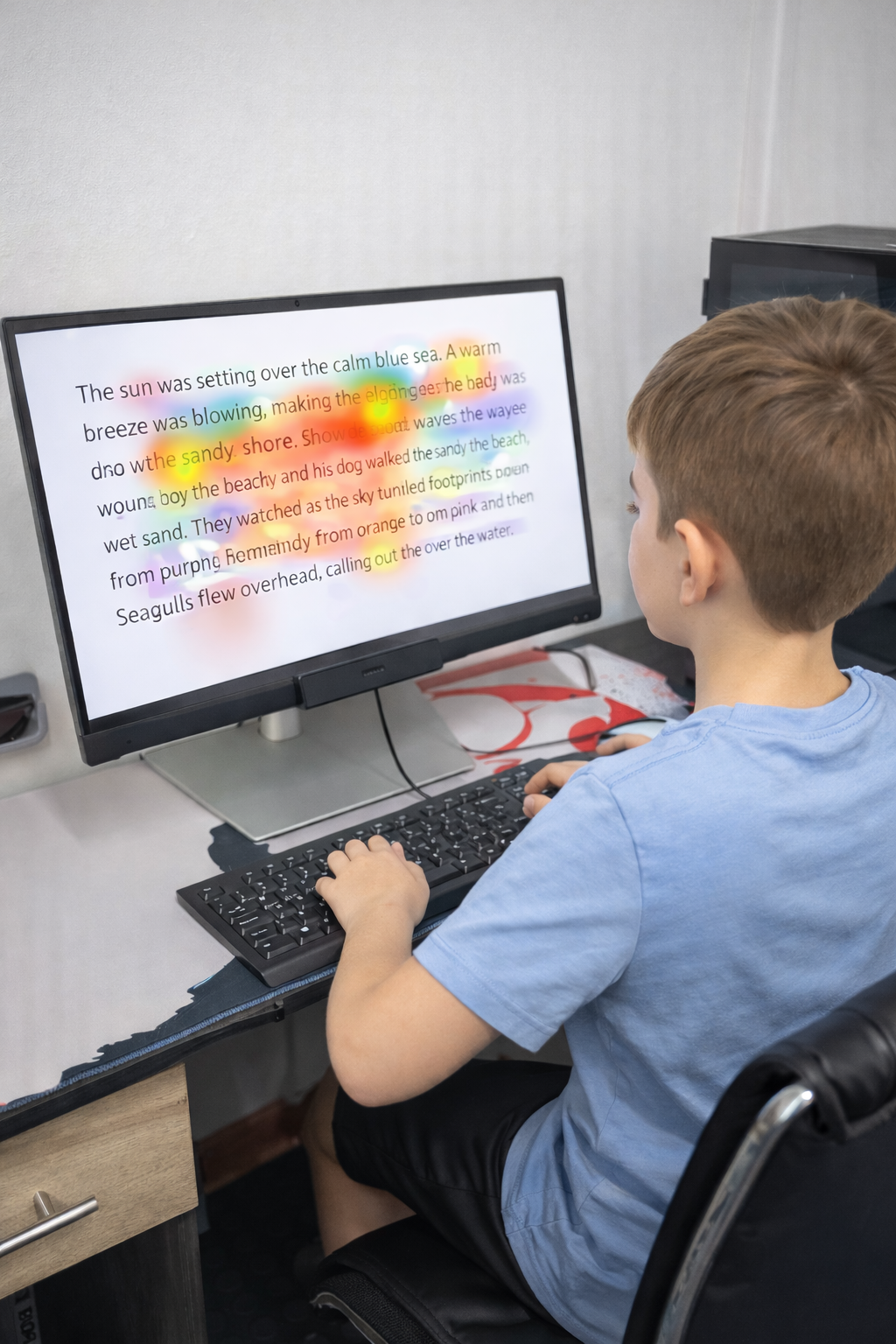
Reading ability and reading tracking eye assessment
Evaluates how efficiently the eyes track, coordinate, and maintain accuracy during reading tasks.
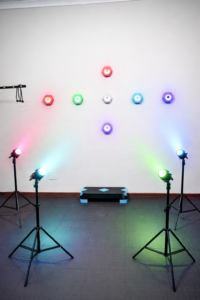
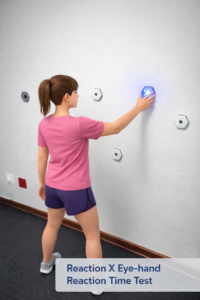
Reaction lights
Up to the millimeter and millisecond accuracy. Measure and train visual reaction time and decision-making speed with millisecond precision.
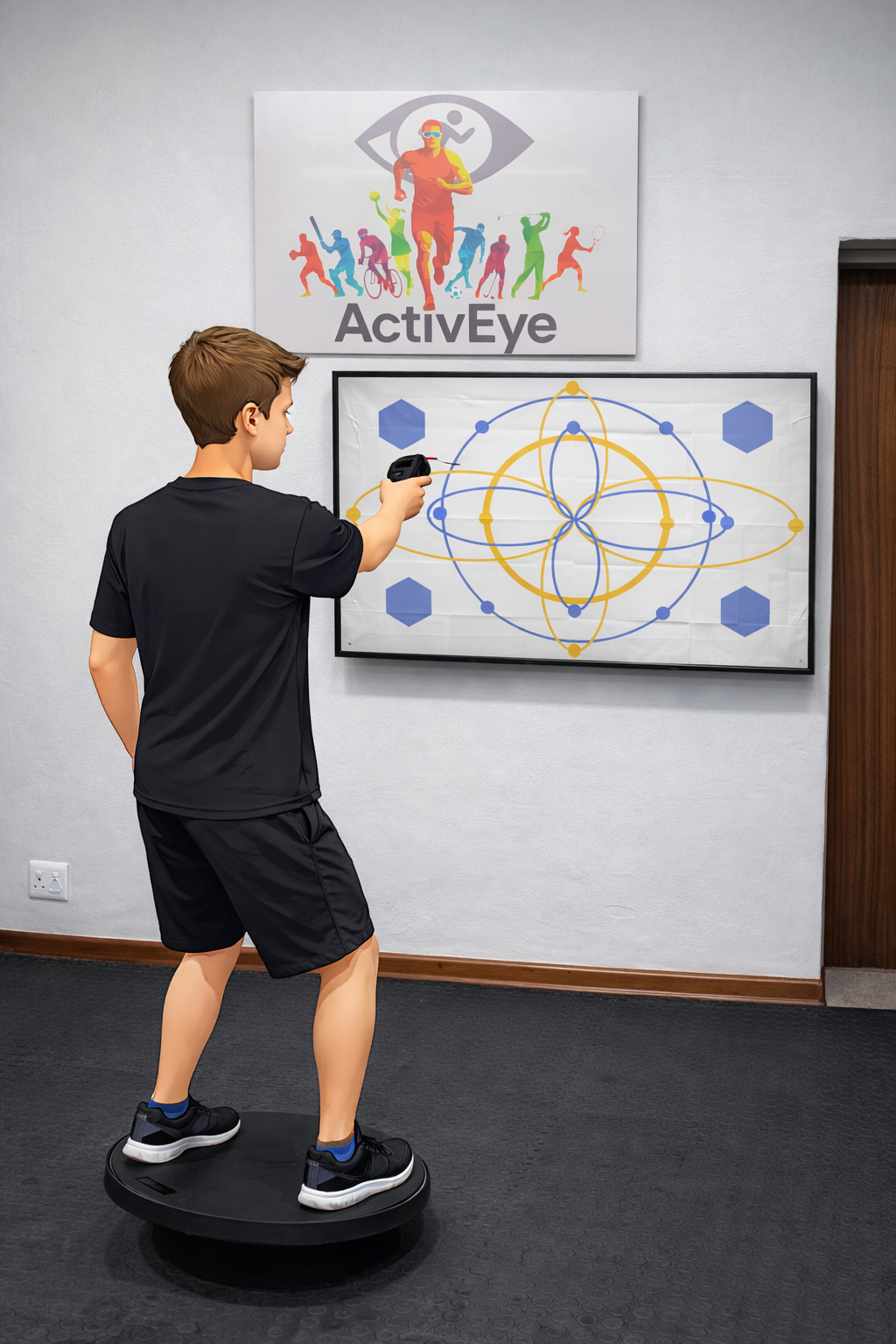
Reaction lights with target and laser (shooting)
Integrates visual reaction, accuracy, and eye–hand coordination under controlled shooting conditions.
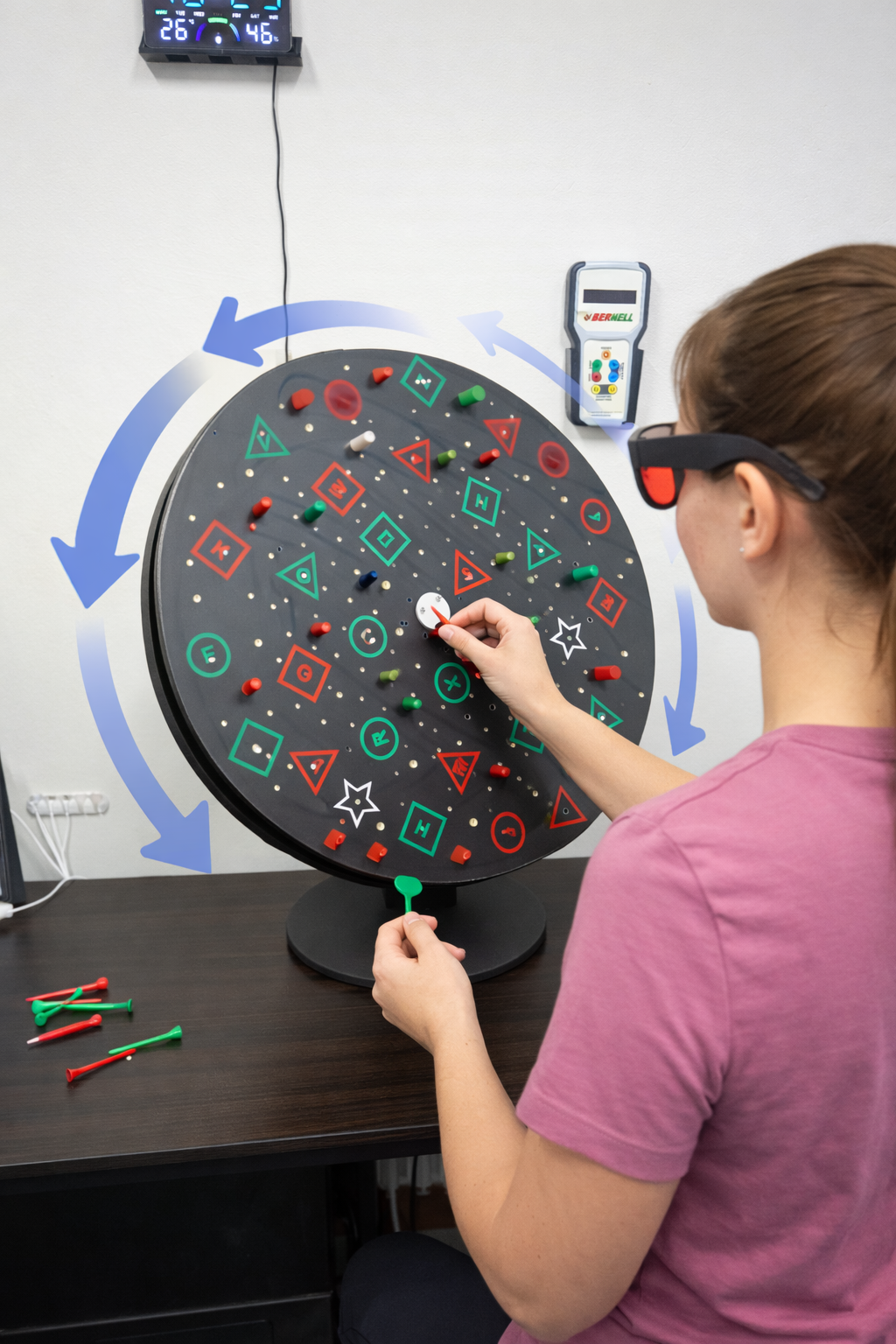
Rotational trainer
Trains smooth pursuit eye movements, visual tracking, and coordination by requiring the eyes to accurately follow moving targets through rotational motion.
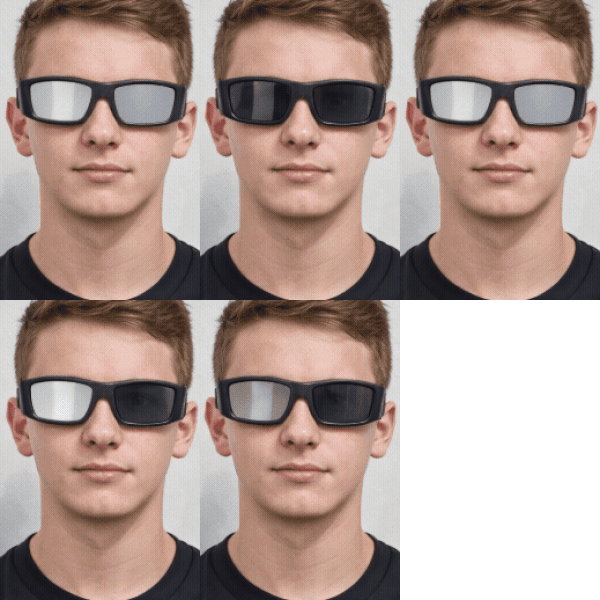
Stroboscopic goggles
Intermittently disrupt vision to train faster visual processing, anticipation, and visual–motor coordination.
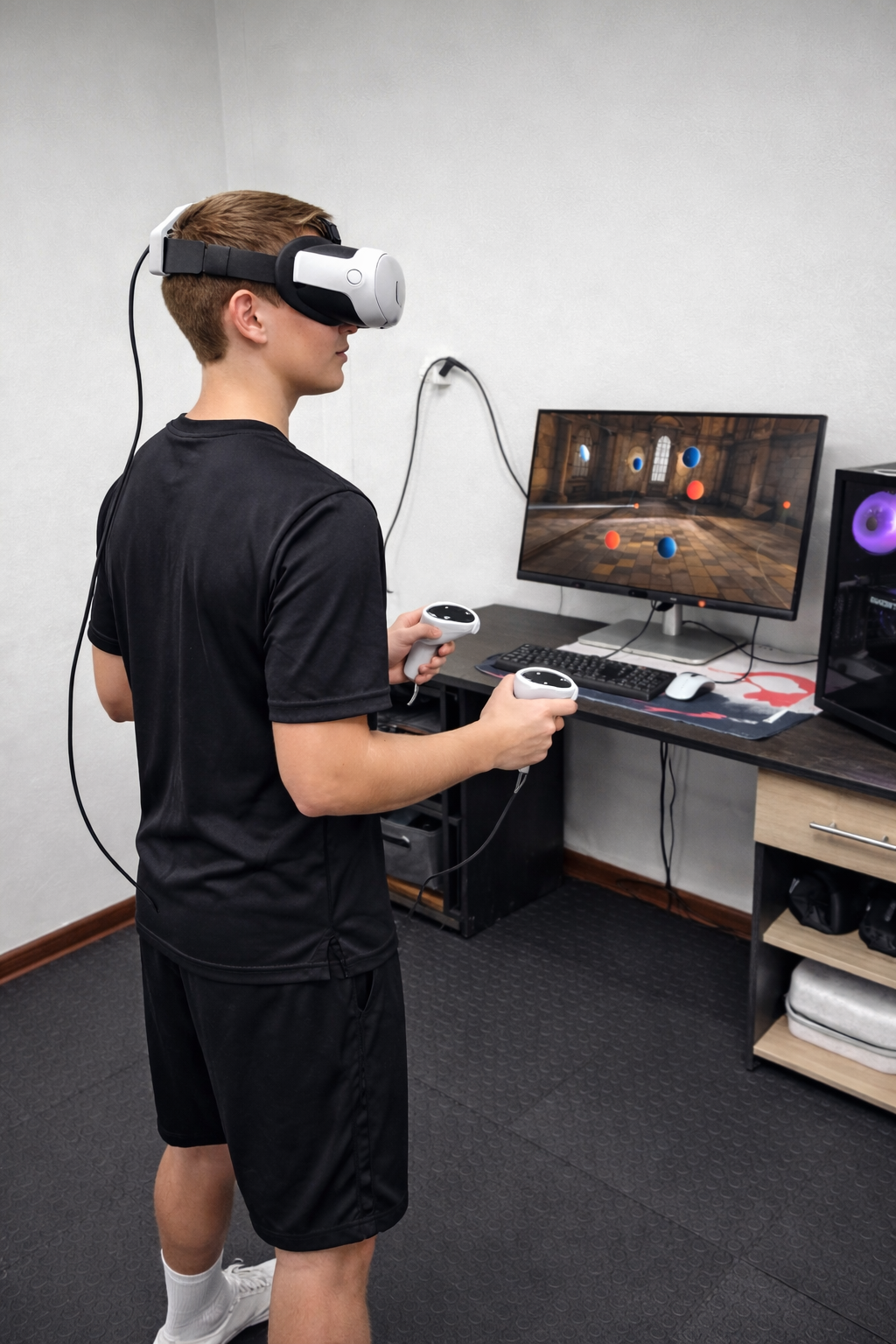
Virtual reality (VR) training
Provides immersive, sport-specific visual training that challenges reaction time, awareness, and visual processing.
How Does Sports Vision Training Work?
Sports Vision Training programmes are:
Individually tailored to the athlete
Adapted to age, sport, and level of participation
Structured over a defined number of sessions
Progressively adjusted as skills improve
Training may include in-practice sessions, guided activities, and regular reassessment, allowing progress to be measured and programmes refined over time.
Who Benefits from Sports Vision Training?
Sports Vision Training may benefit:
School and youth athletes
Competitive and club-level athletes
Elite and professional sportspeople
Recreational athletes
Athletes returning after injury or concussion
Not every athlete requires training — recommendations are always assessment-driven and individualised.
Measurable Performance Improvements
Sports Vision Training focuses on improving functional performance, not just test scores. Athletes commonly report:
Faster and more confident reactions during play
Improved accuracy and consistency
Better awareness of teammates, opponents, and space
Increased confidence under pressure
Progress is tracked and reviewed throughout the training programme.
Training That Supports Performance
Sports Vision Training complements physical coaching and conditioning by strengthening the visual system that guides every movement in sport.
Train your vision. Elevate your performance.
